CSV column mapping audit template
Last updated: 2026-07-31
Written and reviewed by Seller Profit Guard Editorial Team.
A mapping audit records source fingerprint, source and canonical schema versions, record grain, every one-to-one assignment, required targets, field definitions, types, units, currency, signs, date event and timezone, nulls, identifiers, dependencies, transformations, synthetic fixtures, counterexamples, receiving tests, reconciliation, privacy, owner, reviewer, approval, drift, stop rules, and restoration evidence.
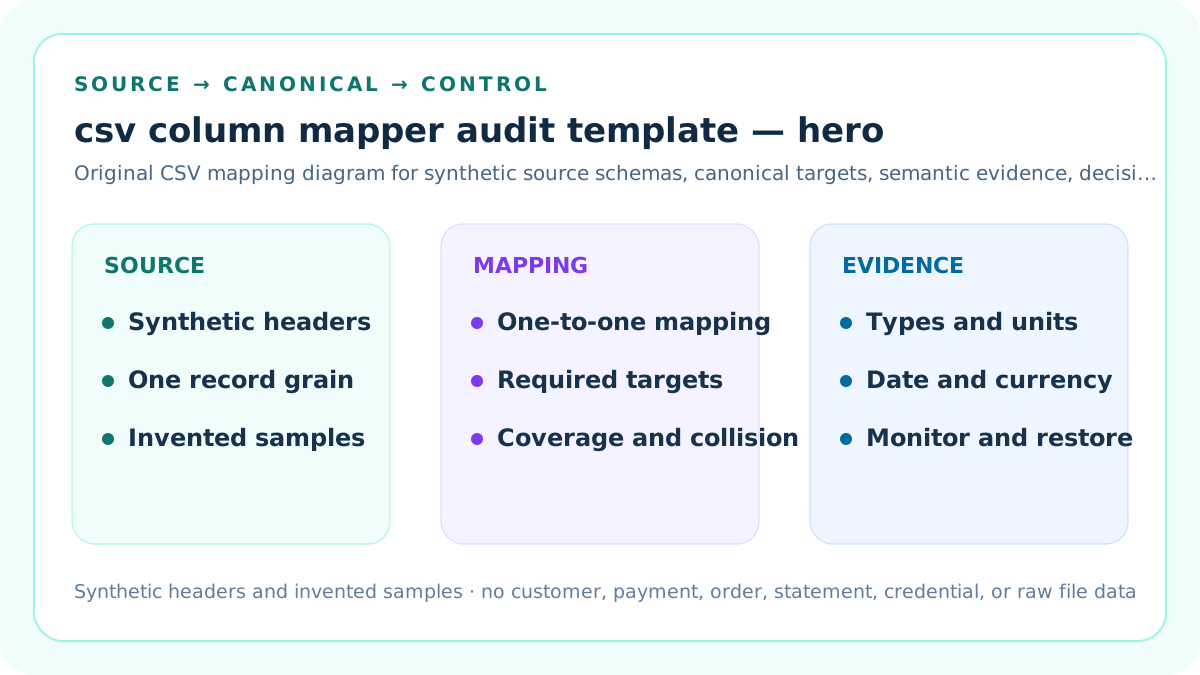
Audit source version
Record platform, export type, fingerprint, period, and owner. The mapping audit packet records source version, grain, synthetic headers, invented samples, canonical version, assignment, type, unit, currency, date semantics, owner, reviewer, exception, and prior accepted value needed for an independently reviewable mapping record.
Use pointers. At checkpoint 1, reperform both fixtures plus one counterexample, report only counts and categories, and state which transformation, platform, reconciliation, privacy, accounting, or import conclusion remains outside this mapper.
Audit canonical version
Record stable names, definitions, and effective date. The mapping audit packet records source version, grain, synthetic headers, invented samples, canonical version, assignment, type, unit, currency, date semantics, owner, reviewer, exception, and prior accepted value needed for an independently reviewable mapping record.
Preserve prior. At checkpoint 2, reperform both fixtures plus one counterexample, report only counts and categories, and state which transformation, platform, reconciliation, privacy, accounting, or import conclusion remains outside this mapper.
Audit grain
Verify order, item, transaction, payout, or other event. The mapping audit packet records source version, grain, synthetic headers, invented samples, canonical version, assignment, type, unit, currency, date semantics, owner, reviewer, exception, and prior accepted value needed for an independently reviewable mapping record.
No mixing. At checkpoint 3, reperform both fixtures plus one counterexample, report only counts and categories, and state which transformation, platform, reconciliation, privacy, accounting, or import conclusion remains outside this mapper.
Audit mappings
Reperform every source-to-target assignment. The mapping audit packet records source version, grain, synthetic headers, invented samples, canonical version, assignment, type, unit, currency, date semantics, owner, reviewer, exception, and prior accepted value needed for an independently reviewable mapping record.
No collision. At checkpoint 4, reperform both fixtures plus one counterexample, report only counts and categories, and state which transformation, platform, reconciliation, privacy, accounting, or import conclusion remains outside this mapper.
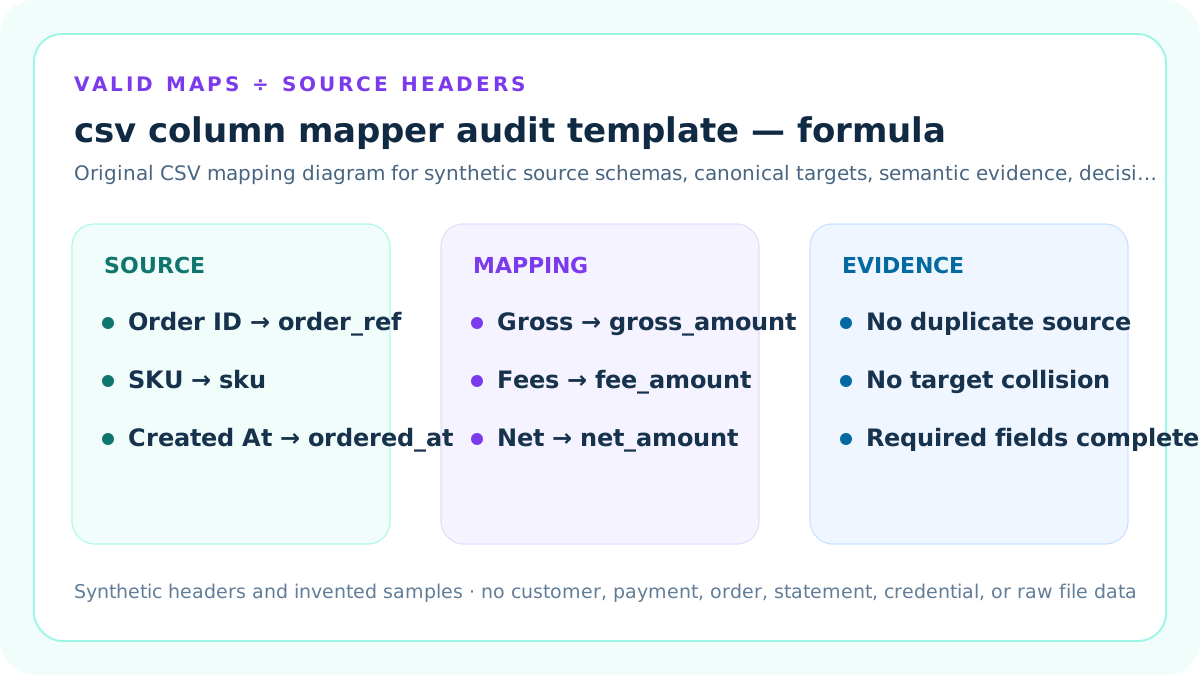
Audit semantics
Verify types, units, currency, signs, dates, and nulls. The mapping audit packet records source version, grain, synthetic headers, invented samples, canonical version, assignment, type, unit, currency, date semantics, owner, reviewer, exception, and prior accepted value needed for an independently reviewable mapping record.
Names are insufficient. At checkpoint 5, reperform both fixtures plus one counterexample, report only counts and categories, and state which transformation, platform, reconciliation, privacy, accounting, or import conclusion remains outside this mapper.
Audit transformations
Trace every conversion, split, join, and derivation. The mapping audit packet records source version, grain, synthetic headers, invented samples, canonical version, assignment, type, unit, currency, date semantics, owner, reviewer, exception, and prior accepted value needed for an independently reviewable mapping record.
Version code. At checkpoint 6, reperform both fixtures plus one counterexample, report only counts and categories, and state which transformation, platform, reconciliation, privacy, accounting, or import conclusion remains outside this mapper.
Audit privacy
Confirm synthetic public fixtures and protected records. The mapping audit packet records source version, grain, synthetic headers, invented samples, canonical version, assignment, type, unit, currency, date semantics, owner, reviewer, exception, and prior accepted value needed for an independently reviewable mapping record.
No raw rows. At checkpoint 7, reperform both fixtures plus one counterexample, report only counts and categories, and state which transformation, platform, reconciliation, privacy, accounting, or import conclusion remains outside this mapper.
Audit tests
Review clean, failed, and isolated receiving cases. The mapping audit packet records source version, grain, synthetic headers, invented samples, canonical version, assignment, type, unit, currency, date semantics, owner, reviewer, exception, and prior accepted value needed for an independently reviewable mapping record.
Reperform. At checkpoint 8, reperform both fixtures plus one counterexample, report only counts and categories, and state which transformation, platform, reconciliation, privacy, accounting, or import conclusion remains outside this mapper.
Audit authority
Verify owners, approvals, exceptions, backup, and stop rules. The mapping audit packet records source version, grain, synthetic headers, invented samples, canonical version, assignment, type, unit, currency, date semantics, owner, reviewer, exception, and prior accepted value needed for an independently reviewable mapping record.
No implicit release. At checkpoint 9, reperform both fixtures plus one counterexample, report only counts and categories, and state which transformation, platform, reconciliation, privacy, accounting, or import conclusion remains outside this mapper.
Audit restoration
Test prior mapping and receiving-state recovery. The mapping audit packet records source version, grain, synthetic headers, invented samples, canonical version, assignment, type, unit, currency, date semantics, owner, reviewer, exception, and prior accepted value needed for an independently reviewable mapping record.
Close monitoring. At checkpoint 10, reperform both fixtures plus one counterexample, report only counts and categories, and state which transformation, platform, reconciliation, privacy, accounting, or import conclusion remains outside this mapper.
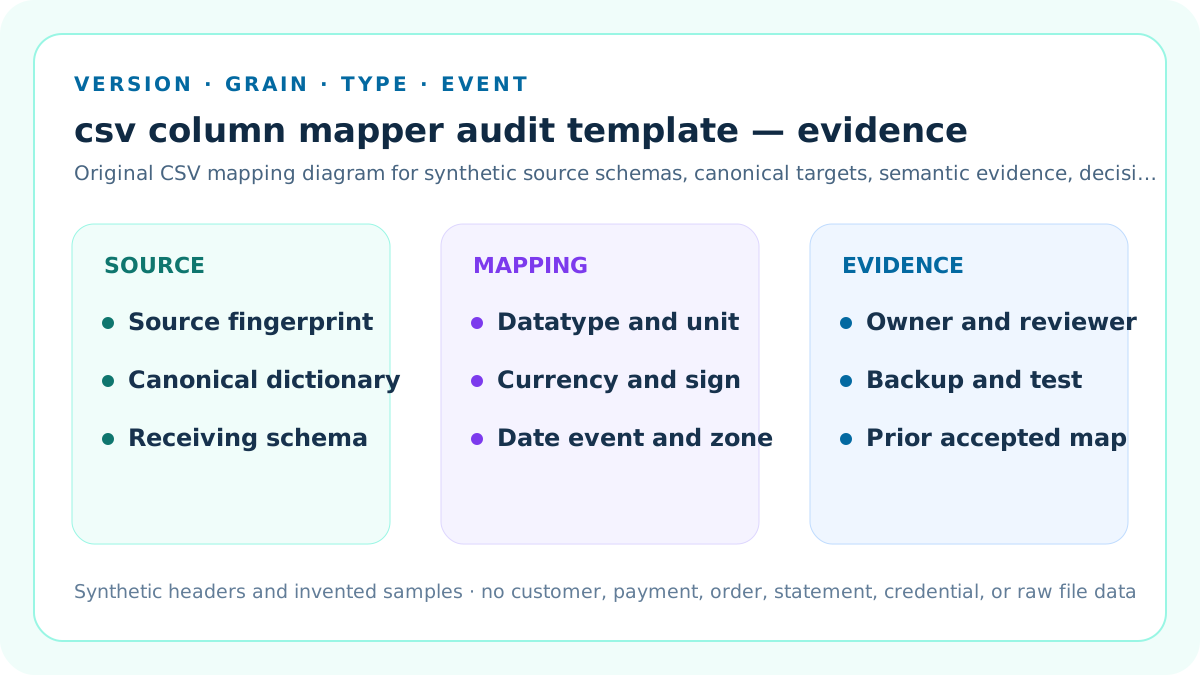
CSV Column Mapping Audit Template: schema and grain integrity control
Version the source fingerprint and canonical dictionary at one declared record grain. Control 1 defines a pass condition, evidence owner, independent reviewer, correction deadline, counterexample, monitoring signal, stop condition, and restoration trigger for an independently reviewable mapping record.
Mixed or drifting schemas block. Apply it while keeping source structure, canonical meaning, transformations, receiving behavior, reconciliation, and import authority separate.
CSV Column Mapping Audit Template: one-to-one mapping evidence control
Require valid source names, lower_snake_case targets, complete required fields, and no duplicate assignments or collisions. Control 2 defines a pass condition, evidence owner, independent reviewer, correction deadline, counterexample, monitoring signal, stop condition, and restoration trigger for an independently reviewable mapping record.
Names do not replace definitions. Apply it while keeping source structure, canonical meaning, transformations, receiving behavior, reconciliation, and import authority separate.
CSV Column Mapping Audit Template: type, currency, and date semantics control
Document datatype, unit, sign, currency, event date, timezone, null, and transformation rules. Control 3 defines a pass condition, evidence owner, independent reviewer, correction deadline, counterexample, monitoring signal, stop condition, and restoration trigger for an independently reviewable mapping record.
Parseability is bounded. Apply it while keeping source structure, canonical meaning, transformations, receiving behavior, reconciliation, and import authority separate.
CSV Column Mapping Audit Template: dated confirmation contract control
Require real source-review and policy-effective dates, keep policy no later than source review, affirm all nine controls, and reject copied order-item and payment-event mapping contracts. Control 4 defines a pass condition, evidence owner, independent reviewer, correction deadline, counterexample, monitoring signal, stop condition, and restoration trigger for an independently reviewable mapping record.
Missing or duplicated evidence blocks. Apply it while keeping source structure, canonical meaning, transformations, receiving behavior, reconciliation, and import authority separate.
CSV Column Mapping Audit Template: bounded public worksheet control
Limit each scenario to 1–100 synthetic source headers and 50,000 evidence characters, screen invented samples for email, card-like, and credential-like values, and mask derived results under Block. Control 5 defines a pass condition, evidence owner, independent reviewer, correction deadline, counterexample, monitoring signal, stop condition, and restoration trigger for an independently reviewable mapping record.
A public worksheet is not protected ETL infrastructure. Apply it while keeping source structure, canonical meaning, transformations, receiving behavior, reconciliation, and import authority separate.
CSV Column Mapping Audit Template: privacy and decision authority control
Use synthetic public fixtures and separate mapping from transformation, reconciliation, platform acceptance, and import approval. Control 6 defines a pass condition, evidence owner, independent reviewer, correction deadline, counterexample, monitoring signal, stop condition, and restoration trigger for an independently reviewable mapping record.
Ready cannot authorize. Apply it while keeping source structure, canonical meaning, transformations, receiving behavior, reconciliation, and import authority separate.
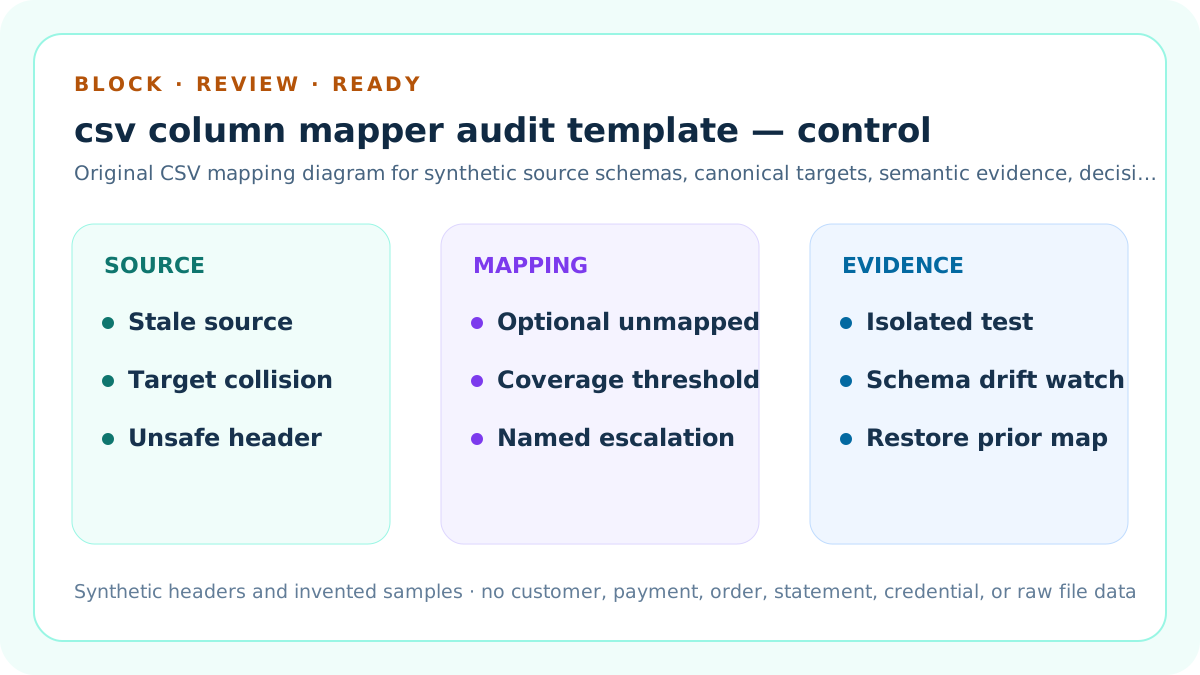
CSV Column Mapping Audit Template: monitoring and restoration control
Fingerprint changes, test receiving behavior, preserve the prior mapping and target state, and restore on stop conditions. Control 7 defines a pass condition, evidence owner, independent reviewer, correction deadline, counterexample, monitoring signal, stop condition, and restoration trigger for an independently reviewable mapping record.
Rollback evidence is mandatory. Apply it while keeping source structure, canonical meaning, transformations, receiving behavior, reconciliation, and import authority separate.
Audit source version: synthetic mapping lab 1
Reperform both mappings. Record platform, export type, fingerprint, period, and owner. Change one header, sample, assignment, required target, currency, date event, timezone, coverage threshold, evidence term, or scope statement only; preserve the rest and record the resulting coverage, error category, and decision.
Use pointers. Test clean, boundary, and failed values without exposing production rows. Explain the dominant change, protected evidence still required, and exact stop or restoration action before any receiving-system test.
Audit canonical version: synthetic mapping lab 2
Reperform both mappings. Record stable names, definitions, and effective date. Change one header, sample, assignment, required target, currency, date event, timezone, coverage threshold, evidence term, or scope statement only; preserve the rest and record the resulting coverage, error category, and decision.
Preserve prior. Test clean, boundary, and failed values without exposing production rows. Explain the dominant change, protected evidence still required, and exact stop or restoration action before any receiving-system test.
Audit grain: synthetic mapping lab 3
Reperform both mappings. Verify order, item, transaction, payout, or other event. Change one header, sample, assignment, required target, currency, date event, timezone, coverage threshold, evidence term, or scope statement only; preserve the rest and record the resulting coverage, error category, and decision.
No mixing. Test clean, boundary, and failed values without exposing production rows. Explain the dominant change, protected evidence still required, and exact stop or restoration action before any receiving-system test.
Audit mappings: synthetic mapping lab 4
Reperform both mappings. Reperform every source-to-target assignment. Change one header, sample, assignment, required target, currency, date event, timezone, coverage threshold, evidence term, or scope statement only; preserve the rest and record the resulting coverage, error category, and decision.
No collision. Test clean, boundary, and failed values without exposing production rows. Explain the dominant change, protected evidence still required, and exact stop or restoration action before any receiving-system test.
Audit semantics: synthetic mapping lab 5
Reperform both mappings. Verify types, units, currency, signs, dates, and nulls. Change one header, sample, assignment, required target, currency, date event, timezone, coverage threshold, evidence term, or scope statement only; preserve the rest and record the resulting coverage, error category, and decision.
Names are insufficient. Test clean, boundary, and failed values without exposing production rows. Explain the dominant change, protected evidence still required, and exact stop or restoration action before any receiving-system test.
Audit transformations: synthetic mapping lab 6
Reperform both mappings. Trace every conversion, split, join, and derivation. Change one header, sample, assignment, required target, currency, date event, timezone, coverage threshold, evidence term, or scope statement only; preserve the rest and record the resulting coverage, error category, and decision.
Version code. Test clean, boundary, and failed values without exposing production rows. Explain the dominant change, protected evidence still required, and exact stop or restoration action before any receiving-system test.
Audit privacy: synthetic mapping lab 7
Reperform both mappings. Confirm synthetic public fixtures and protected records. Change one header, sample, assignment, required target, currency, date event, timezone, coverage threshold, evidence term, or scope statement only; preserve the rest and record the resulting coverage, error category, and decision.
No raw rows. Test clean, boundary, and failed values without exposing production rows. Explain the dominant change, protected evidence still required, and exact stop or restoration action before any receiving-system test.
Audit tests: synthetic mapping lab 8
Reperform both mappings. Review clean, failed, and isolated receiving cases. Change one header, sample, assignment, required target, currency, date event, timezone, coverage threshold, evidence term, or scope statement only; preserve the rest and record the resulting coverage, error category, and decision.
Reperform. Test clean, boundary, and failed values without exposing production rows. Explain the dominant change, protected evidence still required, and exact stop or restoration action before any receiving-system test.
Audit authority: synthetic mapping lab 9
Reperform both mappings. Verify owners, approvals, exceptions, backup, and stop rules. Change one header, sample, assignment, required target, currency, date event, timezone, coverage threshold, evidence term, or scope statement only; preserve the rest and record the resulting coverage, error category, and decision.
No implicit release. Test clean, boundary, and failed values without exposing production rows. Explain the dominant change, protected evidence still required, and exact stop or restoration action before any receiving-system test.
Audit restoration: synthetic mapping lab 10
Reperform both mappings. Test prior mapping and receiving-state recovery. Change one header, sample, assignment, required target, currency, date event, timezone, coverage threshold, evidence term, or scope statement only; preserve the rest and record the resulting coverage, error category, and decision.
Close monitoring. Test clean, boundary, and failed values without exposing production rows. Explain the dominant change, protected evidence still required, and exact stop or restoration action before any receiving-system test.
CSV Column Mapping Audit Template: intent-specific implementation walkthrough
mapping audit packet checkpoint 1 addresses audit source version for an independently reviewable mapping record. Record platform, export type, fingerprint, period, and owner. Record the source decision, semantic effect, failed alternative, reviewer question, correction owner, monitoring signal, and restoration value. Use pointers.
mapping audit packet checkpoint 2 addresses audit canonical version for an independently reviewable mapping record. Record stable names, definitions, and effective date. Record the source decision, semantic effect, failed alternative, reviewer question, correction owner, monitoring signal, and restoration value. Preserve prior.
mapping audit packet checkpoint 3 addresses audit grain for an independently reviewable mapping record. Verify order, item, transaction, payout, or other event. Record the source decision, semantic effect, failed alternative, reviewer question, correction owner, monitoring signal, and restoration value. No mixing.
mapping audit packet checkpoint 4 addresses audit mappings for an independently reviewable mapping record. Reperform every source-to-target assignment. Record the source decision, semantic effect, failed alternative, reviewer question, correction owner, monitoring signal, and restoration value. No collision.
mapping audit packet checkpoint 5 addresses audit semantics for an independently reviewable mapping record. Verify types, units, currency, signs, dates, and nulls. Record the source decision, semantic effect, failed alternative, reviewer question, correction owner, monitoring signal, and restoration value. Names are insufficient.
mapping audit packet checkpoint 6 addresses audit transformations for an independently reviewable mapping record. Trace every conversion, split, join, and derivation. Record the source decision, semantic effect, failed alternative, reviewer question, correction owner, monitoring signal, and restoration value. Version code.
mapping audit packet checkpoint 7 addresses audit privacy for an independently reviewable mapping record. Confirm synthetic public fixtures and protected records. Record the source decision, semantic effect, failed alternative, reviewer question, correction owner, monitoring signal, and restoration value. No raw rows.
mapping audit packet checkpoint 8 addresses audit tests for an independently reviewable mapping record. Review clean, failed, and isolated receiving cases. Record the source decision, semantic effect, failed alternative, reviewer question, correction owner, monitoring signal, and restoration value. Reperform.
mapping audit packet checkpoint 9 addresses audit authority for an independently reviewable mapping record. Verify owners, approvals, exceptions, backup, and stop rules. Record the source decision, semantic effect, failed alternative, reviewer question, correction owner, monitoring signal, and restoration value. No implicit release.
mapping audit packet checkpoint 10 addresses audit restoration for an independently reviewable mapping record. Test prior mapping and receiving-state recovery. Record the source decision, semantic effect, failed alternative, reviewer question, correction owner, monitoring signal, and restoration value. Close monitoring.
Evidence boundary for an independently reviewable mapping record
The synthetic order-item fixture maps five invented source headers—Order ID, Line Item SKU, Quantity, Item Total, and Created At—to order_ref, sku, quantity, item_total, and ordered_at. Its pipe-separated sample has five invented values, USD currency, and an ISO 8601 UTC order-created timestamp. The synthetic payment fixture maps six invented source headers—Transaction ID, Type, Gross, Fees, Net, and Occurred At—to transaction_ref, transaction_type, gross_amount, fee_amount, net_amount, and occurred_at. It remains transaction-grain evidence rather than being forced into the order-item schema.
The packet demonstrates entered one-to-one mapping evidence. It cannot prove complete-file quality, source meaning, datatype correctness, currency conversion, date interpretation, platform acceptance, transformation correctness, reconciliation, privacy compliance, import safety, or the correct business action.
Release, monitor, and restore the mapping audit packet
Block schema, collision, required-target, type, currency, date, privacy, evidence, scope, threshold, or conflict failures. Review only optional unmapped fields under a named policy. Ready clears the entered synthetic worksheets.
Before indexing or operational use, preserve evidence and rollback artifacts; run typecheck, unit, integration, build, content, similarity, SEO, image, link, privacy, mobile, strict-route, deployment, and live checks; then monitor schema drift without claiming causality.
CSV Column Mapping Audit Template: concrete working record
Record the full mapping audit packet: source and canonical versions, grains, headers, sample positions, assignments, required targets, definitions, types, units, currency, signs, date events, timezones, nulls, identifiers, dependencies, transformations, fixtures, counterexamples, receiving tests, reconciliation, privacy, owners, approvals, exceptions, monitoring, stop rules, and restoration evidence for an independently reviewable mapping record.
Sources and further reading
- W3C: Model for Tabular Data and Metadata: Official column titles, datatypes, required values, identifiers, and schema context.
- W3C: CSV on the Web Primer: Official column documentation, schema, validation, and transformation examples.
- W3C: Metadata Vocabulary for Tabular Data: Official column references, schema compatibility, datatype, and validation vocabulary.
- IETF RFC 4180: Informational CSV header, record, charset, interoperability, and privacy context.
- OWASP: CSV Injection: Current formula-prefix, control-character, full-width variant, and mitigation limits.
- Etsy Help: Download sold transactions: Official distinction among order items, orders, payment sales, and deposits.
- Shopify Help: Using CSV files: Official platform-specific columns, dependencies, version compatibility, and overwrite risk.
- Seller Profit Guard methodology: Evidence, privacy, release, monitoring, correction, and rollback controls.
- Seller Profit Guard data privacy: Local-first boundaries for source records, samples, and mappings.
Related Seller Profit Guard tools
- Seller CSV Column Mapper: Map synthetic source headers to documented canonical targets.
- Seller CSV Import Validator: Validate structure before mapping.
- Ad Attribution Reconciliation Checker: Reconcile aggregate records after mapping.
- Methodology: Apply evidence and release controls.
- Data Privacy: Protect private source rows and identifiers.
- CSV Column Mapping Fields and Rules: Define synthetic headers, invented samples, one-to-one mappings, required targets, currency, date semantics, coverage, evidence, privacy, and decisions.
- Order-Item CSV Mapping Example: Map a synthetic order-item export to stable identifiers, SKU, quantity, amount, and order-created timestamp fields with complete evidence.
- Payment Statement CSV Column Mapping: Map a synthetic payment statement to transaction reference, type, gross, fee, net, and occurred timestamp without collapsing financial grain.
- Seller CSV Column Mapping Mistakes: Find source-version, grain, collision, required-field, sample, type, currency, date, transformation, privacy, authority, and rollback errors.
- CSV Mapping Data Sources and Evidence: Map source documentation, fingerprints, dictionaries, canonical definitions, receiving requirements, samples, owners, and rollback evidence.
- CSV Mapping Decision Thresholds: Set required-target, coverage, collision, drift, test, reconciliation, approval, stop, and restoration controls without weakening semantic quality.
- Order vs Payment CSV Column Mapping: Compare order-item and payment schemas while preserving distinct grains, identifiers, measures, timestamps, transformations, and authority.
- Weekly Seller CSV Mapping Routine: Run source fingerprint, schema, synthetic mapping, privacy, transformation, backup, test, reconciliation, drift, and restoration checks weekly.
- How to Interpret CSV Mapping Results: Read header counts, valid mappings, coverage, required gaps, collisions, privacy findings, errors, and decisions without overstating semantic proof.
Next step: Open Seller Profit Guard.
This is operational planning help, not tax, accounting, legal, financial, or platform-policy advice. Review the Terms and disclaimer, and verify current platform rules and fee assumptions before changing prices.