Shopify fees calculator: 9 costs small stores miss
Last updated: 2026-07-12
Written and reviewed by Seller Profit Guard Editorial Team.
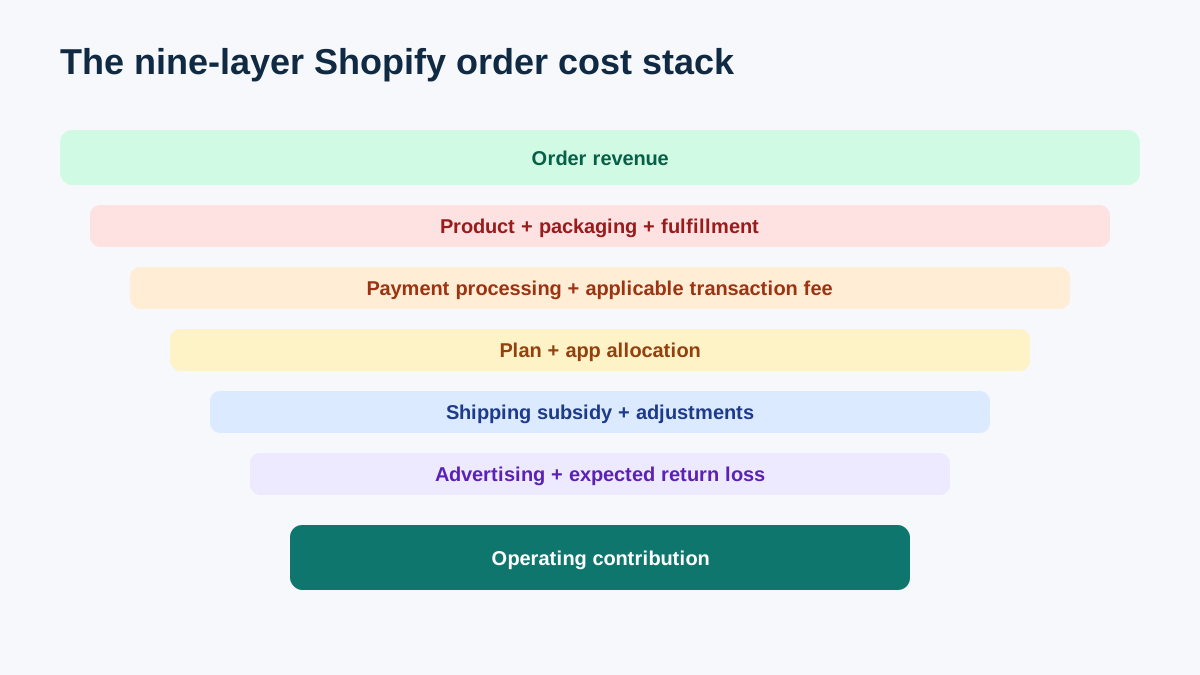
A useful Shopify fees calculator starts with one order and subtracts nine cost layers: product, packaging, fulfillment, payment processing, third-party transaction fees when applicable, plan and app allocation, shipping subsidy, advertising, and expected return loss.
What should a Shopify fees calculator include?
Most Shopify margin mistakes start with an incomplete denominator. A merchant subtracts product cost and a card fee, sees money left over, and calls it profit. The missing costs are usually fixed software, packaging, fulfillment, shipping adjustments, discounts, advertising, and returns. A useful calculator keeps every layer visible and editable instead of hiding them in one platform-fee percentage.
Shopify's official billing documentation separates subscription charges, app charges, shipping-label charges, transaction fees, usage charges, and one-time charges. Payment-provider costs and third-party transaction fees are also different: Shopify explains that third-party transaction fees can apply when an external payment provider is used and are additional to the provider's own processing fee. The exact plan, provider, location, and payment method matter, so this guide uses a formula structure rather than claiming one permanent rate.
| Cost layer | Where to find it | Per-order treatment |
|---|---|---|
| Product cost | Supplier invoice or production record | Use the actual unit cost for the sold variant. |
| Packaging | Boxes, mailers, inserts, tape and labels | Add the materials consumed by one shipment. |
| Fulfillment | 3PL invoice or seller labor assumption | Use pick, pack and handling cost per order. |
| Payment processing | Shopify Payments or provider statement | Apply the current percentage and fixed fee to the correct base. |
| Third-party transaction fee | Shopify plan and bill | Add only when the store/payment method is subject to it. |
| Plan and apps | Shopify Billing and app subscriptions | Allocate recurring cost across realistic monthly orders. |
| Shipping subsidy | Buyer-paid shipping versus label and adjustments | Subtract the amount the store absorbs. |
| Advertising | Channel spend divided by attributed orders | Use CPA or expected ad spend per converted order. |
| Return loss | Returns, reverse shipping and recovery records | Use expected loss per order, not the full refund rate alone. |
How do you estimate Shopify app cost per order?
Estimate monthly app cost as recurring charges plus expected usage charges, amortized one-time charges, and externally billed app costs. Divide that monthly pool by realistic completed orders to get app cost per order. Keep the Shopify plan separate unless your worksheet clearly labels a combined software-overhead pool.
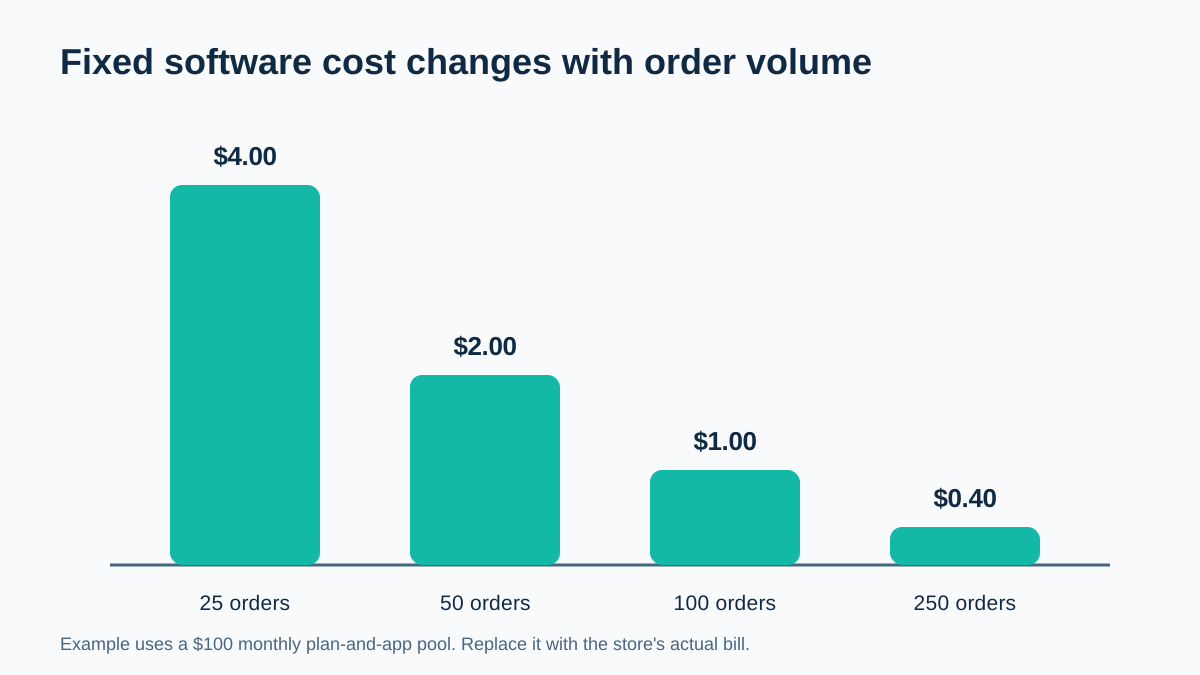
For a combined view, calculate monthly software overhead as the Shopify plan plus the monthly app estimate, then divide by completed orders for the same period. If the store pays 39 for its plan and estimates 61 across apps, the pool is 100. At 100 completed orders, the allocation is 1.00 per order; at 25 orders, it is 4.00. Low-volume stores often underestimate this layer because subscriptions feel separate from product sales.
Use completed, revenue-producing orders rather than sessions or carts. If an app serves only one product line, allocate that app to the orders that benefit from it instead of spreading the cost across the entire catalog. Shopify notes that app charges can be recurring, usage-based, one-time, credited, or billed externally, and an app's billing cycle can differ from Shopify's subscription billing cycle.
- Monthly app estimate = recurring charges + expected usage charges + amortized one-time charges + external app charges.
- App cost per order = monthly app estimate divided by expected completed orders.
- Use a conservative order forecast when volume is volatile.
- Separate store-wide software from product-specific apps.
- Review usage charges, external billing, and billing-cycle differences separately.
- Update the allocation after a material change in order volume or subscriptions.
| Monthly orders | Plan + app pool | Allocated per order |
|---|---|---|
| 25 | $100 | $4.00 |
| 50 | $100 | $2.00 |
| 100 | $100 | $1.00 |
| 250 | $100 | $0.40 |
A complete Shopify product margin example
Consider a product sold for 48.00 with 5.00 buyer-paid shipping. Product cost is 15.00, packaging is 1.50, fulfillment is 3.50, and the label costs 6.20. The buyer-paid shipping offsets 5.00 of the label, leaving a 1.20 shipping subsidy. Assume 1.75 for plan and app allocation, 3.00 expected return loss, and 8.00 ad spend per converted order. Payment and transaction assumptions must be entered from the store's current plan and provider records.
Before payment-related fees, the order has 53.00 revenue and 33.95 in listed non-payment costs, leaving 19.05. After payment processing and any applicable third-party transaction fee, the remaining contribution may be much smaller than the gross margin suggests. If the target contribution is 20%, the merchant should compare the result with 10.60, not merely check whether the number stays above zero.
This example is deliberately editable. It does not assert a universal Shopify rate, and it does not include tax, duties, currency conversion, inventory accounting, financing, or owner compensation. Use the store's bill and provider statement for the actual fee base and amounts.
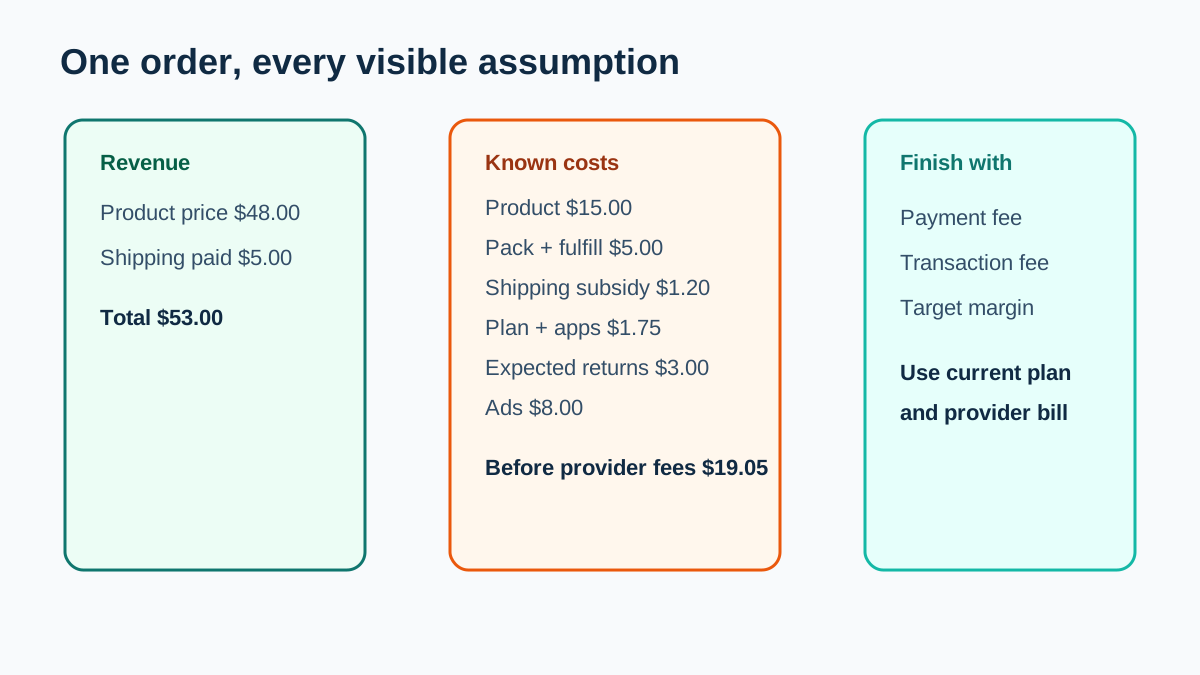
- Revenue: item price plus buyer-paid shipping.
- Direct cost: product, packaging, fulfillment and net shipping subsidy.
- Recurring allocation: plan and app cost per completed order.
- Risk cost: advertising and expected return loss.
- Provider cost: current processing and applicable transaction fees.
How do returns and advertising change break-even ROAS?
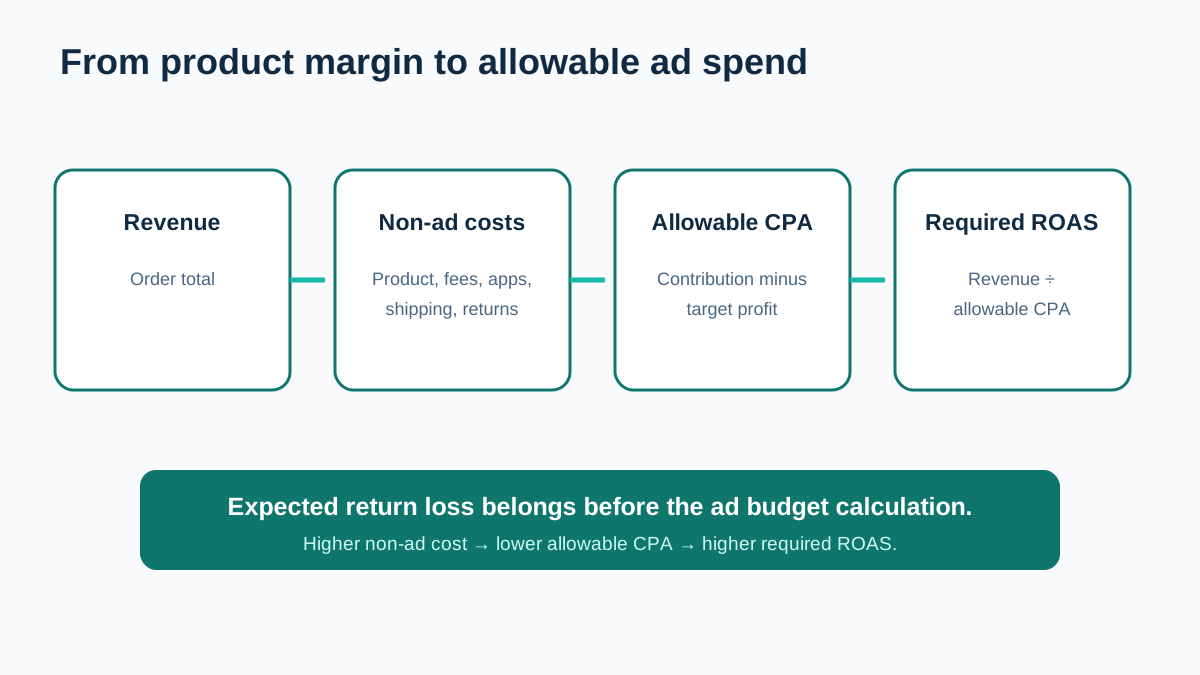
Break-even CPA is the contribution available before advertising. If an order contributes 14 before ads, spending 14 to acquire it leaves no contribution for overhead, tax, or owner profit. Target-margin-safe CPA is lower because the target contribution must be reserved before advertising spend is allowed.
Expected return loss belongs before the break-even calculation. Multiply the expected loss per returned order by the return rate, then subtract that expected amount from every order. A 10% return rate does not mean subtracting 10% of revenue if returned products can be restocked or if shipping, handling, and damage create a different loss. Model the actual components: refunded revenue, reverse shipping, lost outbound shipping, restock work, damaged inventory, support time, and recovery value.
Break-even ROAS equals revenue divided by break-even CPA. Target ROAS equals revenue divided by target-margin-safe CPA. When expected returns or app allocations rise, allowable CPA falls and required ROAS rises. That is why a store can report a familiar advertising ROAS while a low-ticket product quietly loses contribution.
Common Shopify fee calculator mistakes
Do not combine every fee into one rate unless the same base and rule applies to each component. Fixed payment fees behave differently from percentages. Third-party transaction fees depend on plan and payment setup. App usage charges do not behave like a monthly subscription. Shipping adjustments can arrive after the label purchase. Refunds may not reverse every fee or operating cost.
Do not allocate monthly software using an optimistic sales goal. Use recent completed orders or a conservative forecast, then run a low-volume case. Do not treat free shipping as free to the store. Do not use average product cost when a variant changes material, weight, packaging, or fulfillment. Do not set paid-traffic budgets from revenue alone.
- Using gross sales as profit.
- Ignoring fixed payment fees.
- Missing third-party transaction fees when applicable.
- Ignoring app usage or external billing.
- Spreading product-specific software across unrelated orders.
- Treating buyer-paid shipping and label cost as the same number.
- Leaving expected return loss outside the ad calculation.
- Using one cost for materially different variants.
Shopify fees calculator FAQ
Does Shopify charge both payment processing and a transaction fee? They are different charges. Shopify's official help says third-party transaction fees can apply when using third-party payment providers and are additional to the provider's processing fees. Shopify Payments and certain payment methods can be treated differently. Verify the current plan, provider, location, payment method, and bill.
Should app costs be included in product margin? Yes, when the goal is an operating contribution estimate. Allocate store-wide recurring apps across realistic completed orders and assign product-specific apps to the products that use them.
Are Shopify subscription fees refunded if a store closes? Shopify's pricing FAQ says subscription plan charges are non-refundable. Billing timing, pending app charges, and external app subscriptions can create additional considerations, so review Billing and the app provider before closing or pausing.
What is the difference between break-even and target-margin-safe CPA? Break-even CPA can consume all contribution before ads. Target-margin-safe CPA reserves the seller's target contribution first, so it is lower and produces a higher required ROAS.
Is this tax or accounting profit? No. It is a product-level operating estimate. It does not replace the store's books, tax treatment, inventory accounting, duties, currency effects, or professional advice.
Sources and further reading
- Shopify Help: Types of charges on Shopify bills: Official subscription, app, shipping, transaction, usage, and one-time charge categories.
- Shopify Help: Third-party transaction fees: Official applicability, calculation base, exclusions, and refund notes.
- Shopify Help: App charges on Shopify bills: Official recurring, usage, one-time, credit, external billing, and billing-cycle guidance.
- Shopify Help: Pricing plans FAQ: Official plan-change, payment-provider, pause, deactivation, and refund guidance.
Related Seller Profit Guard tools
- Cross-border seller calculators: Enter editable Shopify, ROAS, app, return, and fulfillment assumptions.
- Tool subscription audit: Allocate monthly software costs across realistic orders.
- Return window loss estimator: Model expected return and recovery cost per order.
- Break-even ROAS guide: Connect contribution before ads with allowable CPA and ROAS.
Next step: Open Cross-border Seller Calculators.
This is operational planning help, not tax, accounting, legal, financial, or platform-policy advice. Review the Terms and disclaimer, and verify current platform rules and fee assumptions before changing prices.